To Santa Fe

If we wanted to immerse ourselves in the local culture, we couldn’t have asked for better hosts than Buzz, Neil and Gabe. They’d arranged for us all to attend the Pueblo Immersion, organised by the Indian Pueblo Cultural Center (IPCC). Before leaving for this event, though, Liesel and I started packing for our next little adventure, side-trip, whatever you call it.

We drove past the Cannabis Dispensary on the way to the IPCC but made no plans to pay a visit, sample the goods or anything.

On arrival at IPCC, we were all presented with a Visitors’ lanyard and all of ours had a blue sticker which meant that later on, we would all be in the blue group for the tour around the museum.

We were seated at tables, all facing the front, like being in a school classroom again, not quite trusting the folks behind us to behave.

After an enjoyable lunch, we watched Flo and Lee with an interesting pottery demonstration: Flo making the clay bird while Lee very carefully painted a finished, fired plate.
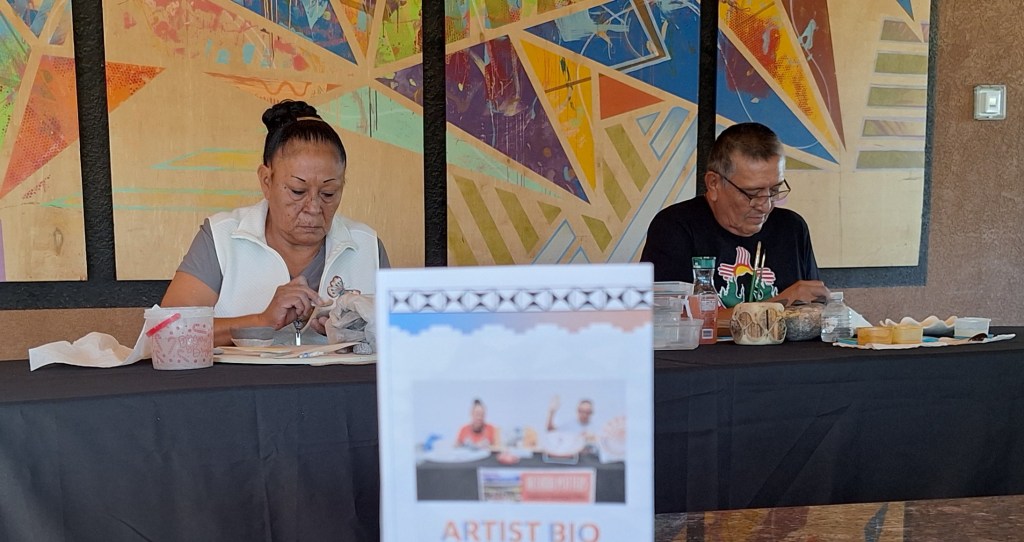
Flo and Lee

The pottery is made using shale clay mixed with old pottery shards to create a water-tight seal. After “white slipping” with wet white sandstone, the pottery is polished. Orange paint is made from mashed and strained orange sandstone, while black paint is a mix of Iron Oxide and wild spinach juice. The Yucca leaf is used for applying paint after being chewed on to remove excess fibers and achieve the correct thickness for fine line and detailed painting. I would never have guessed that spinach was involved, but all the skills have been passed down through several generations. Flo and Lee are pleased that their grandchildren are now showing an interest too.

Lee Vallo’s intricate decoration

Anthony was the guide for the blue group’s tour of the museum. We saw how the different pueblos developed, how the people got on, even though there were several different languages being spoken. And the pots made in different places have distinctive shapes and designs.

Different pots

We learned about Po’Pay’s successful Pueblo revolt against the Spanish invaders in 1680. The Spaniards were either killed or expelled from the province. Unfortunately for the locals, they returned 12 years later.

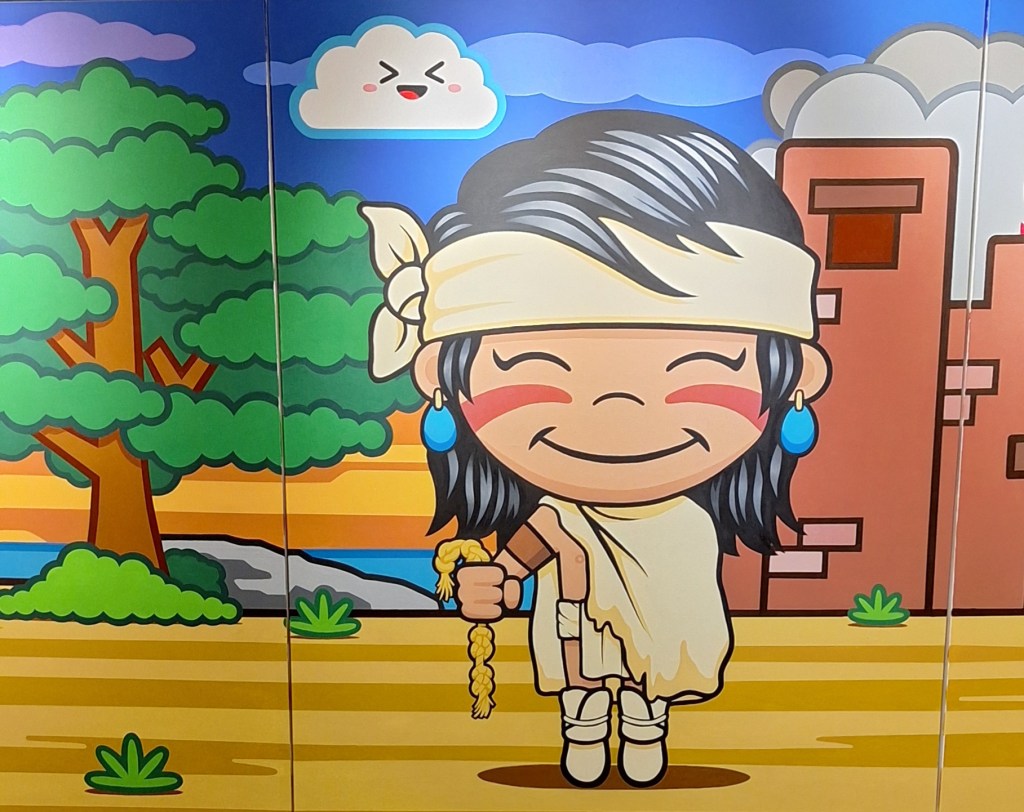
Po’Pay
A modern depiction of Po’Pay

The Indian Pueblo Cultural Center (IPCC) is honored to collaborate with NSRGNTS, an Albuquerque-based duo comprised of artists Leah Povi Lewis (Laguna, Taos, Zuni Pueblos/Hopi/Diné) and Votan (Maya/Nahua), on a commissioned mural created for the Art Through Struggle Gallery. NSRGNTS is a successful Indigenous brand, business, and art collective that advocates for Indigenous rights. They are known for their murals of Indigenous resilience painted in vivid colors in a “kawaii” style – a “cute,” illustrative style similar to Japanese anime. Their seven-panel mural provides a visual story of Pueblo empowerment throughout the past, present, and future.

This, the middle section focuses on an integral event of Pueblo history – the 1680 Pueblo Revolt that resulted in the ousting of Spanish rule in Pueblo lands for 12 years. Holding a knotted yucca cord, Po’pay, the Ohkay Owingeh leader of this revolt, stands at the center as a role model and a figure of strength.

As soon as the tour ended, Liesel and I had to rush off to the airport, oops, sorry, Albuquerque International Sunport. Jyoti  and her new man, Rupert, were joining us from North Carolina. We found them easily enough, hugged and all that, and took them back for a quick hello-goodbye with Buzz, Neil, Gabe and Leslie. The new arrivals were joining Liesel and me on our trip to Santa Fe. This will be the first significant amount of time Liesel and I have spent without Mom for about a year.

The drive to Santa Fe was interesting, as we passed many different landscapes. It seemed to me that the further north we were, the greener it was. Santa Fe is also 2,000 feet higher in altitude than Albuquerque and I was already fed up with the nosebleeds caused by, or at least exacerbated by, the high altitudes and low humidity.
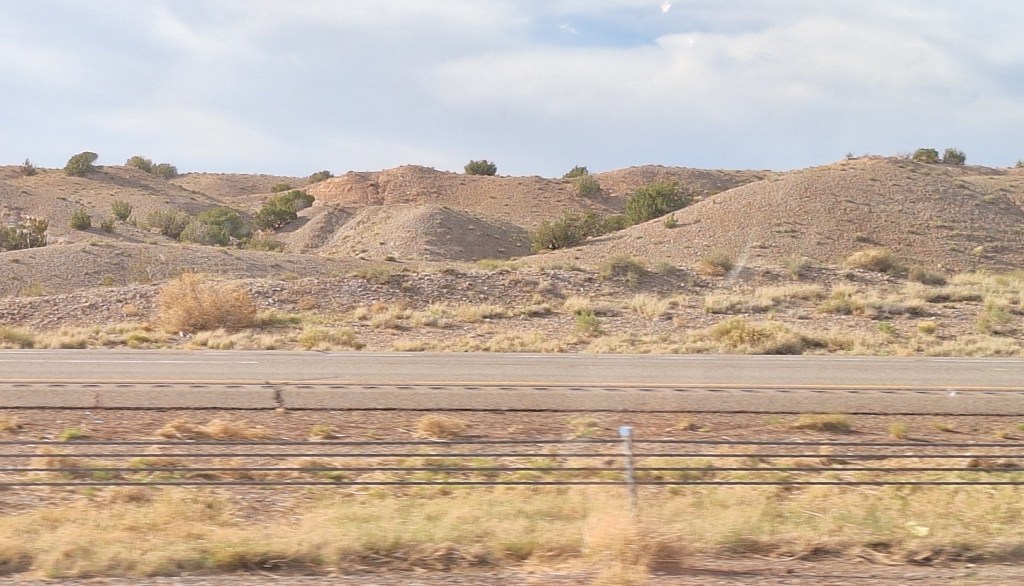
Hillocks
El Cerro de la Cosena

This isn’t a volcano but a naturally eroded hill southwest of Santa Fe.

We arrived at Tammy’s house while it was still light. You remember Tammy? She walked Hadrian’s Wall with Liesel, Jyoti, Teresa and me two years ago. Sadly, Teresa, Tammy’s sister, wasn’t here for the grand reunion. We miss you, Teresa! For the first time, I met Tammy’s husband, Aaron.

The view from Tammy and Aaron’s house

After breakfast (Jyoti fixed me her world-famous fried eggs on toast, and I still don’t know why Americans fix food, it’s not broken, is it, but there you go, separated by a common language, now where was I…?) oh yeah, after breakfast, we all drove into Santa Fe and had a walk around the Old Town.

The original walls and altar of the San Miguel Chapel were built in 1610 by a group of Tlaxcala Indians from Mexico, who accompanied the early Spanish settlers to New Mexico. The site of the chapel shows evidence of previous human occupation from around 1300 A.D.

The chapel roof was burned during the Pueblo Indian Revolt of 1680. Evidence of the fire that destroyed the roof can be seen in the adobe bricks of the chapel today, since new adobes for the reconstruction were mixed on the site and bits of charcoal were inevitably mixed into the mud.

San Miguel Chapel
Very old floor

This city too is proud to show of its artworks, murals, sculptures and of course, the architecture is wonderful, and it’s always good to see a low-level place: there are few skyscrapers here
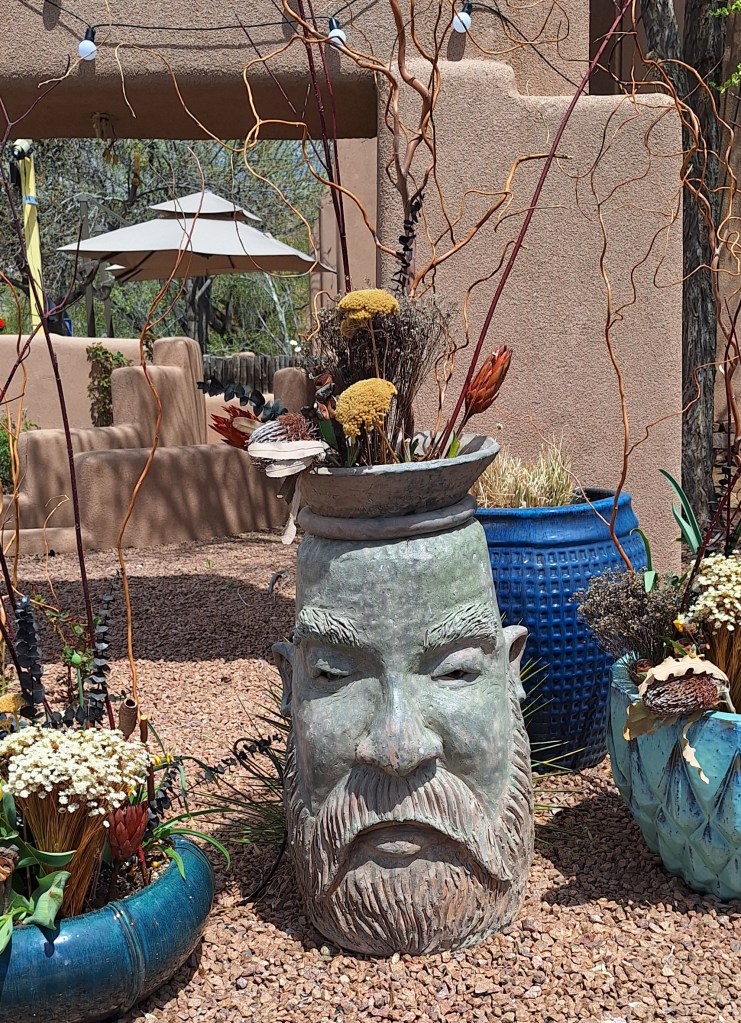
Santa Fe resident

There are 300 art galleries along Canyon Road. We’ll probably visit them one day, but we’ll need to find something to do later on in the afternoon.
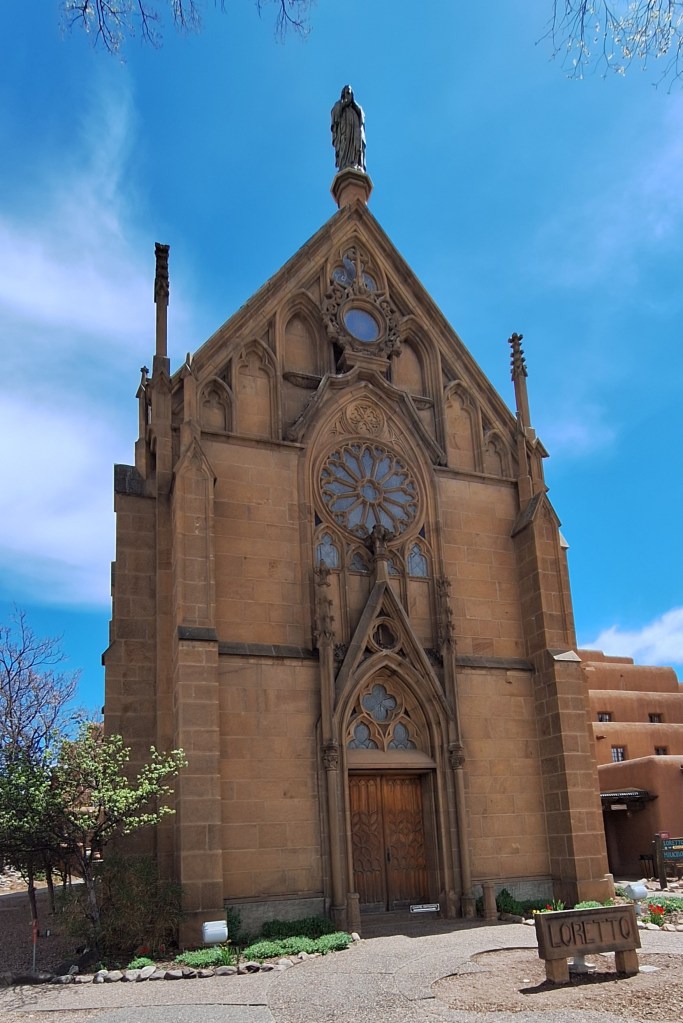
Loretto Chapel
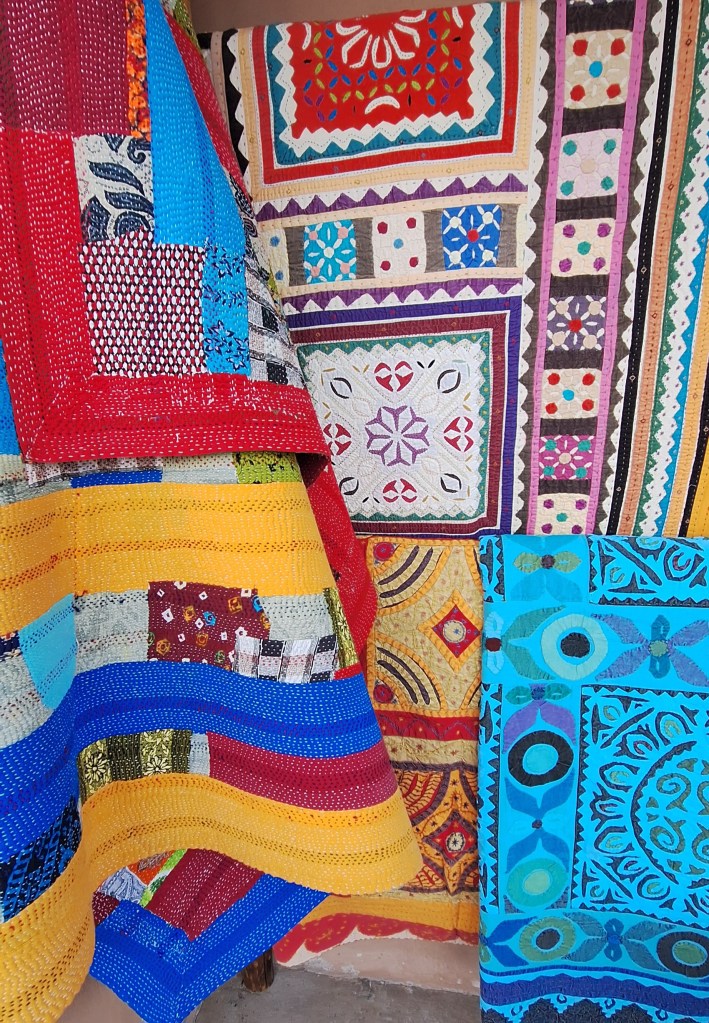
Colourful fabric

The locally made rugs attracted our attention. They’re not necessarily perfect, sometimes the colours run, but if we had the wallspace, I think we might have purchased one.

We viewed some phots taken by Edward Curtis. He was an American photographer and ethnologist whose work focused on the American West and Native American people. Sometimes referred to as the “Shadow Catcher”, Curtis traveled the United States to document and record the dwindling ways of life of various native tribes through photographs and audio recordings. I was going to buy a book about him, but the typeface was tiny, so I’ll get it on the old Kindle later on.
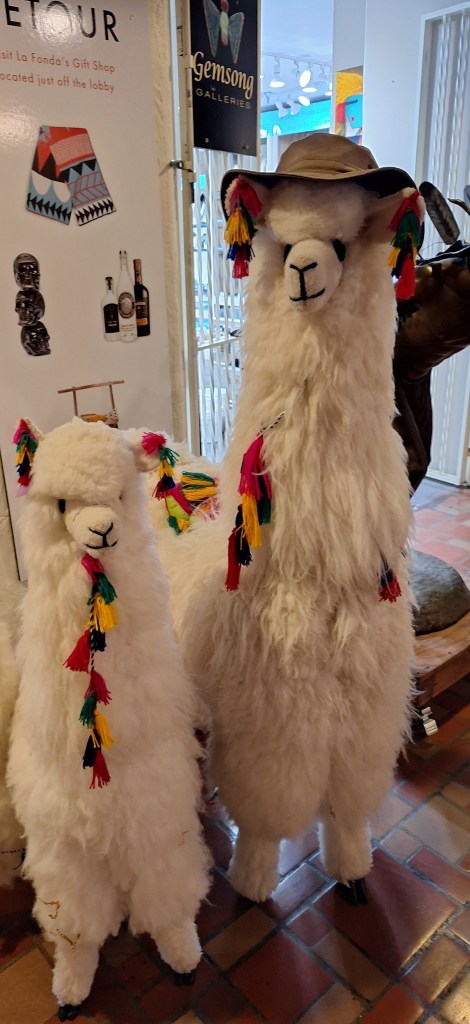
Alpaca stole my hat

Liesel and I had visited an exhibition of Georgia O’Keeffe’s paintings at Tate Modern some years ago. It was good to visit the Georgia O’Keeffe Museum here in Santa Fe. She lived for a long time in New Mexico.
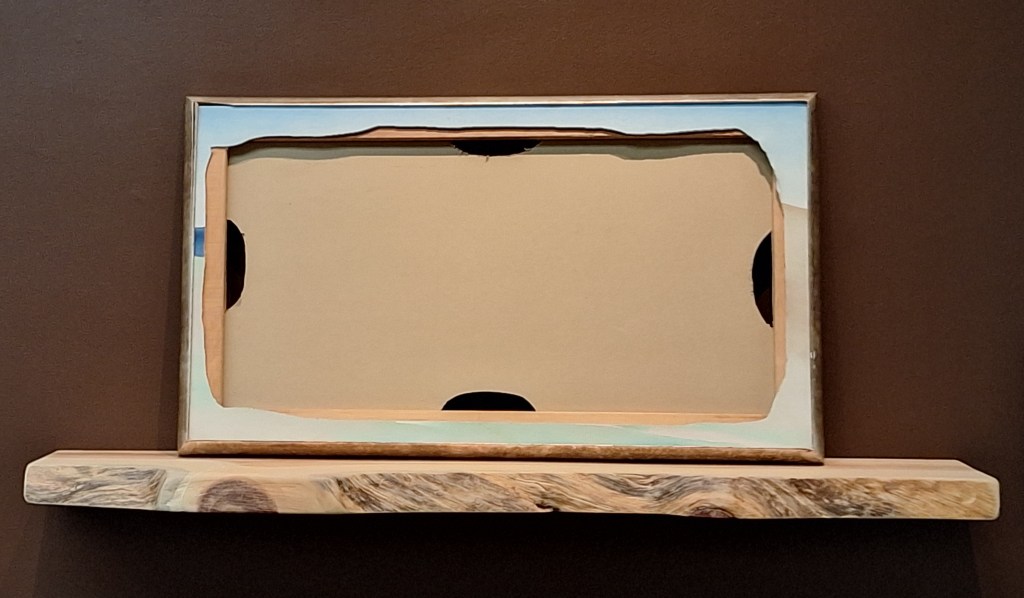
A painting by and destroyed by Georgia O’Keeffe

No idea what this picture was, but Georgia didn’t like it and cut it up just a couple of years later. What a shame.

I realised that I have a lot in common with Georgia O’Keeffe. She liked to dress in black or white. And all the socks I currently own are either black or white. I wish I had her artistic talent, though.

Have you ever seen a horse box?

Well, here are two horses, boxing

We sat outside watching the Sun go down behind the trees and the mountains, listening to the birds and even a train tooting its horn as it passed by in the distance. And it did become noticeably colder as the evening wore on.
Science

The Karl G Jansky Very Large Array is a two-hour drive from home, about 130 miles. Neil, Liesel’s uncle, invited me to join him on his first visit there for several decades. I will always enjoy a visit to an astronomical telescope, whereas Liesel thinks she’s seen enough.

During the drive, Neil told me about many of the events that occurred during his long and varied career in the Air Force, some details of which are still classified. He explained why and how he and Buzz settled here in Albuquerque.

We drove through a lot of desert, what I expected New Malden to look like, no, not New Malden, New Mexico, no idea what happened there, muscle memory in the two typing fingers, I guess. Anyway,  we even drove through an Indian Reservation, but if I hadn’t seen the sign, I wouldn’t have known.

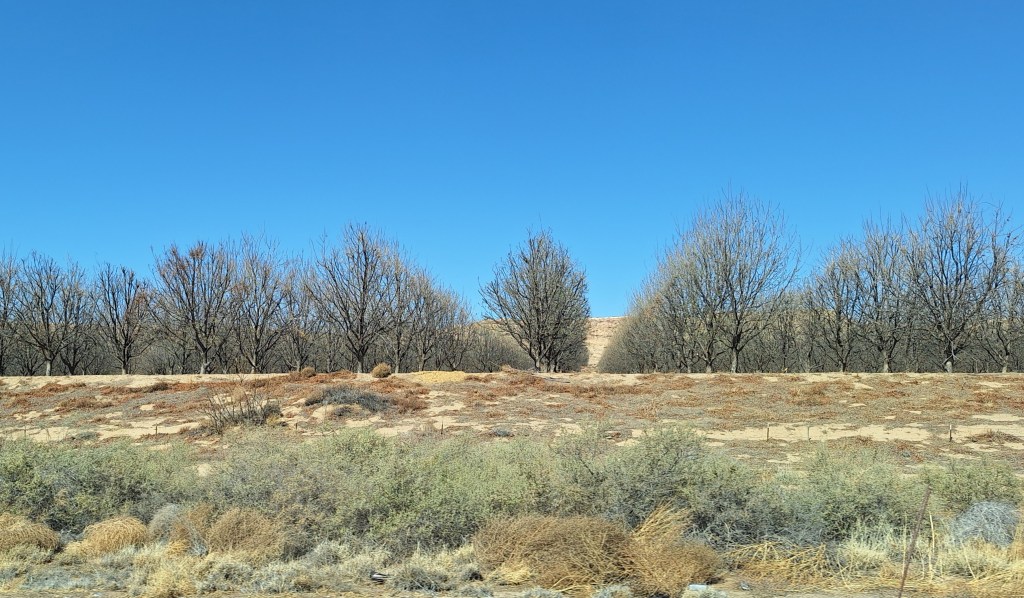
Pecan orchard

Apparently pecans require a lot of water to grow, so it seems strange that there is such a large plantation here, in a state which is really quite dry. Even the great Rio Grande has been known to dry up sometimes.

On the way, we passed an array of solar panels much larger than I’d ever seen, anywhere. It must produce a lot of energy, but what a shame the panels aren’t a little bit higher, so that grass can grow underneath for the local flock of sheep, or other grass-eating food. My offer to drive a bit and give Neil a break was declined. I’m sure I would have coped on the long, dead straight highways with little other traffic.

After nearly two hours, we saw the VLA in the distance, through the trees and we soon parked up.

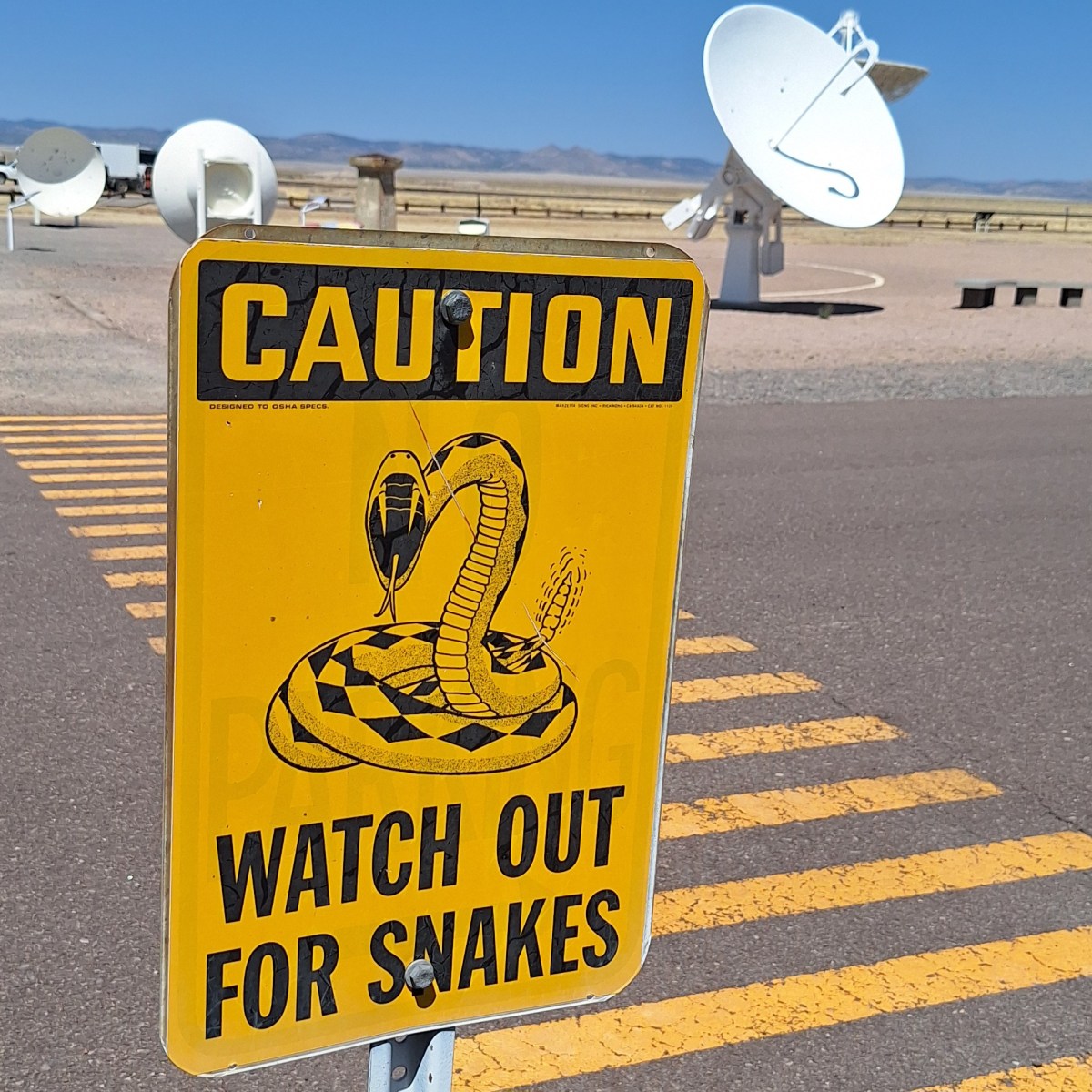
We took our time on the self-guided walk around the site. The solar radio telescope looks more like a musical instrument, being horn shaped, but no, I didn’t blow through it.

I was very impressed by the Bracewell Radio Sundial, though, so different to all the other sundials I’ve seen, and indeed, even made, in my youth.

Sundial in front of radio dishes

I’m so glad Neil gave me the information sheet so I don’t have to remember all the details myself…

Using the Bracewell Sundial

The Bracewell Sundial has a large sphere mounted atop a slim metal post. Locate this sphere and note where its shadow falls. There are three major sets of markers – metal disks – set into the concrete that mark the hours from 8 a.m. to 4 p.m. at four dates of the year. The disks labeled “Summer Solstice” show the time on June 21; the disks labeled “Winter Solstice” are for December 21; and the disks labeled “Equinoxes” are for March 20 and September 23. Small, diamond-shaped markers indicate the hours at intermediate dates, such as July 21, August 21, etc. The sphere’s shadow thus indicates not only the time of day but also, roughly, the time of year. All the markers for a particular hour, the round disks and the diamonds, trace a line toward one of the concrete piers.

It’s a long way to go to find the time. Plus, of course, they have to pick up all the posts and move them round a bit to accommodate Daylight Savings.

Selfie of the day

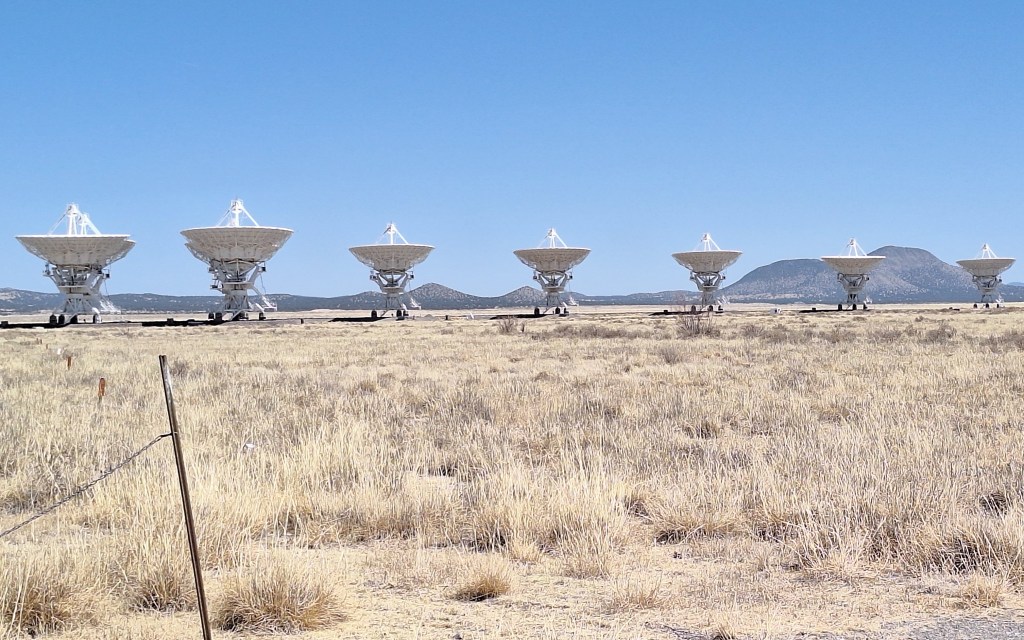
The main attraction here of course is the Very Large Array, comprised of 27 radio telescopes, each of which weights 230 tons. They are moved along  the ‘wye’, a Y-shaped configuration of railroad tracks, each 13 miles long. In effect, the array acts as a single antenna with a variable diameter. The angular resolution that can be reached is between 0.2 and 0.04 arcseconds.

Seven dishes (out of 27 + a spare)

The building in which we believe most of the work is done seemed deserted today: at least, we couldn’t see anyone as we peered through the window from the balcony.

Shiva: Shiwana by artist Jon Barlow Hudson

Funded through the New Mexico Arts Council, this three-armed sculpture represents the three tracks of the VLA and the floating, three-dimensional natures of the objects the VLA studies.

On the drive back, we stopped for lunch in Socorro and yes, of course, I couldn’t finish my avocado salad, the serving was far too big. Even Neil an acclimatised American, couldn’t manage that much food.

And of course, the problem with eating that much food meant that come dinner time, I wasn’t at all hungry.

Thank you very much, Uncle Neil, for a fascinating day out!

Liesel and I enjoyed seeing the petroglyphs in Australia a few years ago, so it was only fair to go and view some here in New Mexico. They’re hundreds rather than tens of thousands of years old, but just as fascinating.

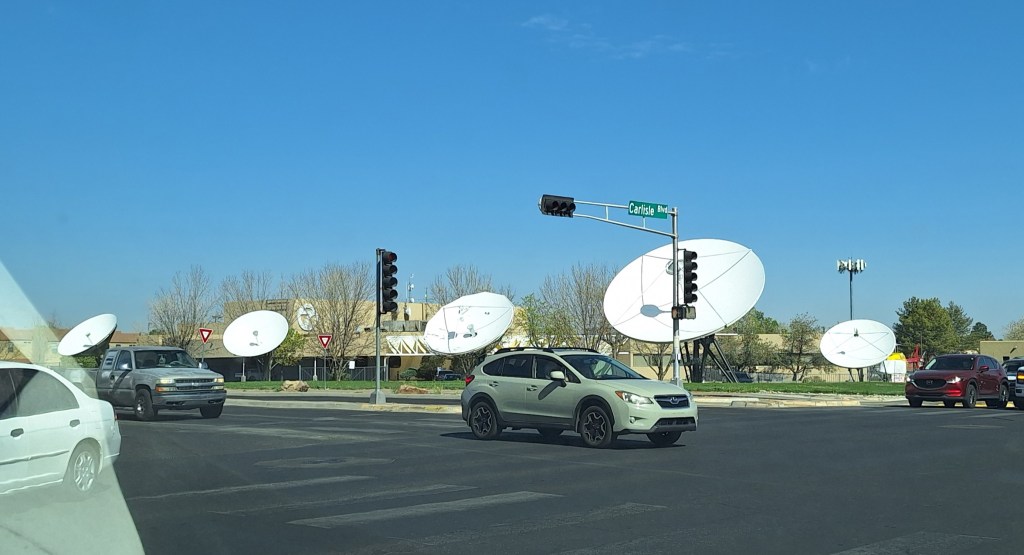
On the way through the city centre, we passed a rather smaller array of dishes than I’d seen yesterday.

Satellite dishes

Piedras Marcadas Canyon looks like I expected the whole state to look like. Desert sand, a few volcanic rock, some cactuses, a few cacti as well. Because it was flagged as ‘strenuous’, we chose to do the Mesa Top Trail, a ‘quick’ mile and a half hike that would lead us to the Petroglyph Viewing Trail, another mile and a half of fun. We were also warned that on the mesa: no petrogyphs, no water, no shade, no facilities and definitely no bushes behind which one could take ones ease.

What we got instaed was a challenging hike up a fairly steep rocky and sandy slope to the plateau. The view of the city was stunning but sadly, my attempted panoramic picture just shows too much foreground. We did see a few small lizards, though, and a few ants. The hinted-at millipedes remained hidden from sight.

An eastern side-blotched lizard
Liesel, about to descend from the mesa

There were plenty of other people on the path which now was almost pure sand. The volcanic rocks, basalt, were well spread out, and it was onto these that long ago, people were happy to show off their artistic skills.

Among the petroglyphs, we saw stars, birds, hands with six fingers (proving that in fact, they were made by aliens), an alien face (see?), road-runners, snakes, reversed music notation and a man wearing a funny hat. One was dated 1541, but we couldn’t determine whether that was when the conquistadors turned up or if it was drawn in 1541 BC.

Some petroglyphs

Ah, but here’s an explanatory plaque: Petroglyphs represent a valuable record of cultural expression and human occupation in the Rio Grande valley. They have deep spiritual significance to modern Pueblo groups as well as other indigenous people such as the Diné (Navajo) and the Apache. Similar images continue to have value in contemporary ceremonial life for many Southwesten tribes. The associated meanings of some petroglyphs are known by a few Southwestern tribal groups, while the direct meanings of other images have been lost over the centuries.

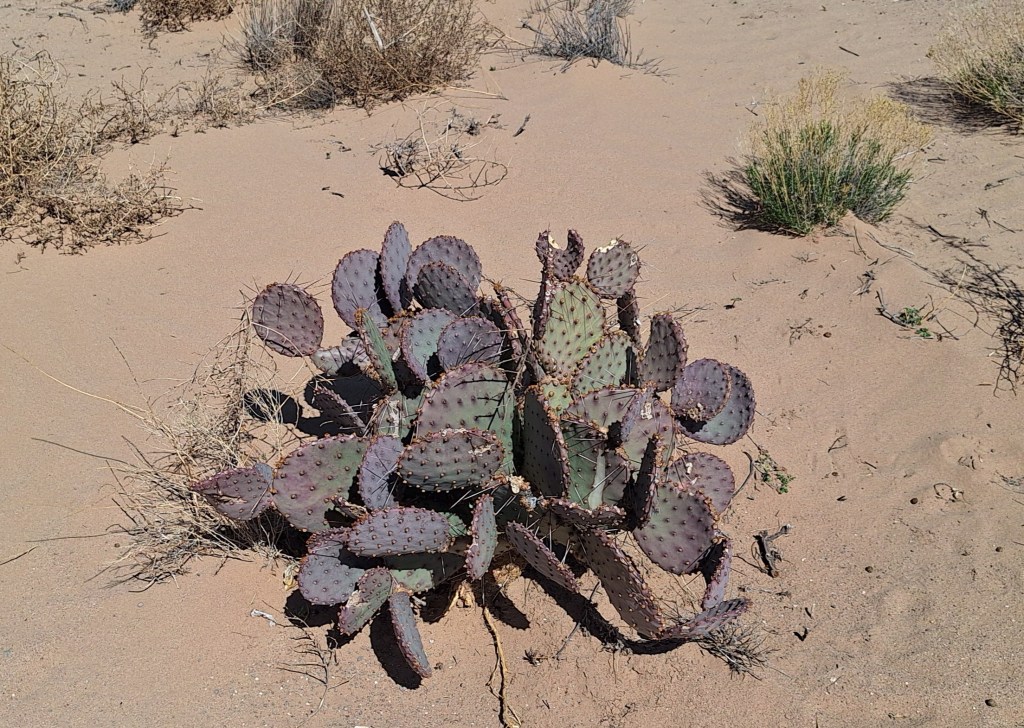
Prickly pear

It was a really good hike, in the heat of the Sun, and looking around, we could see mountains in the distance and, again, just a few solitary clouds drifting by.

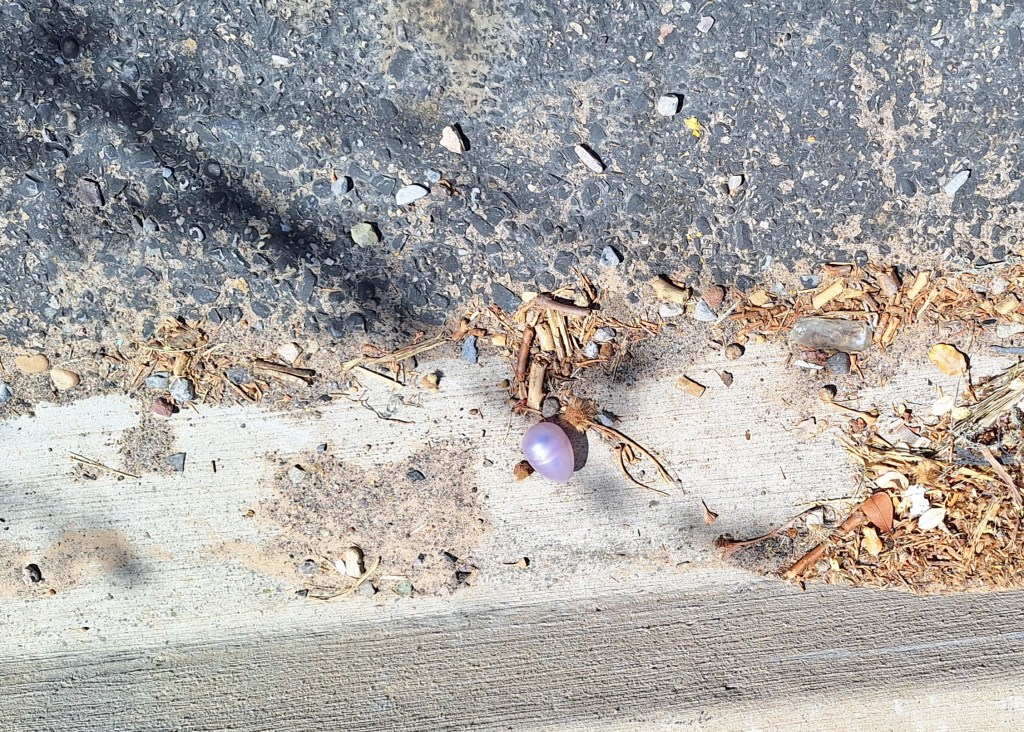
Lizard egg

When we got back to it, the car was like most politicians: full of hot air.

Meanwhile, back at home, Martha took part in a performance of Annie at school, singing all the hits from the show with great gusto. Yes, Great Gusto and all her other class mates.

The sun will come out
Tomorrow
Bet your bottom dollar
That tomorrow
There’ll be sun!
Well, there’d better be, here in New Mexico, thank you very much.

At home, making use of one of her birthday gifts, Martha built a machine that blows bubbles. A scientist in the making.

Martha

Branching out

We were sorry to miss Martha’s birthday again, but we spoke to her briefly online. She was about to sink her teeth into her third birthday cake. Not to mention a delicious beverage in a Greek restaurant.

Cheers, Martha

Just as exciting, for me, was the continuation of my own birhday. Jenny and Helen had arranged for their present for me to be sent here to Buzz’s place and I wasn’t allowed to see it until we were all together, chatting online. It was lovely to see them both nd we had a good chat.

Half of Jenny, half of Helen and a whole Mick

I opened the box online, and it did feel like one of those influencer-style unboxing videos on Instagram that come up and bore us from time to time. Thank you Helen and Jenny, it was a fantastic idea, something that I’d never thought to have asked for. I am now the proud owner of a Seestar S50, a smart telescope that (of course) is controlled via an app and will let me take some fab pictures of the night sky.

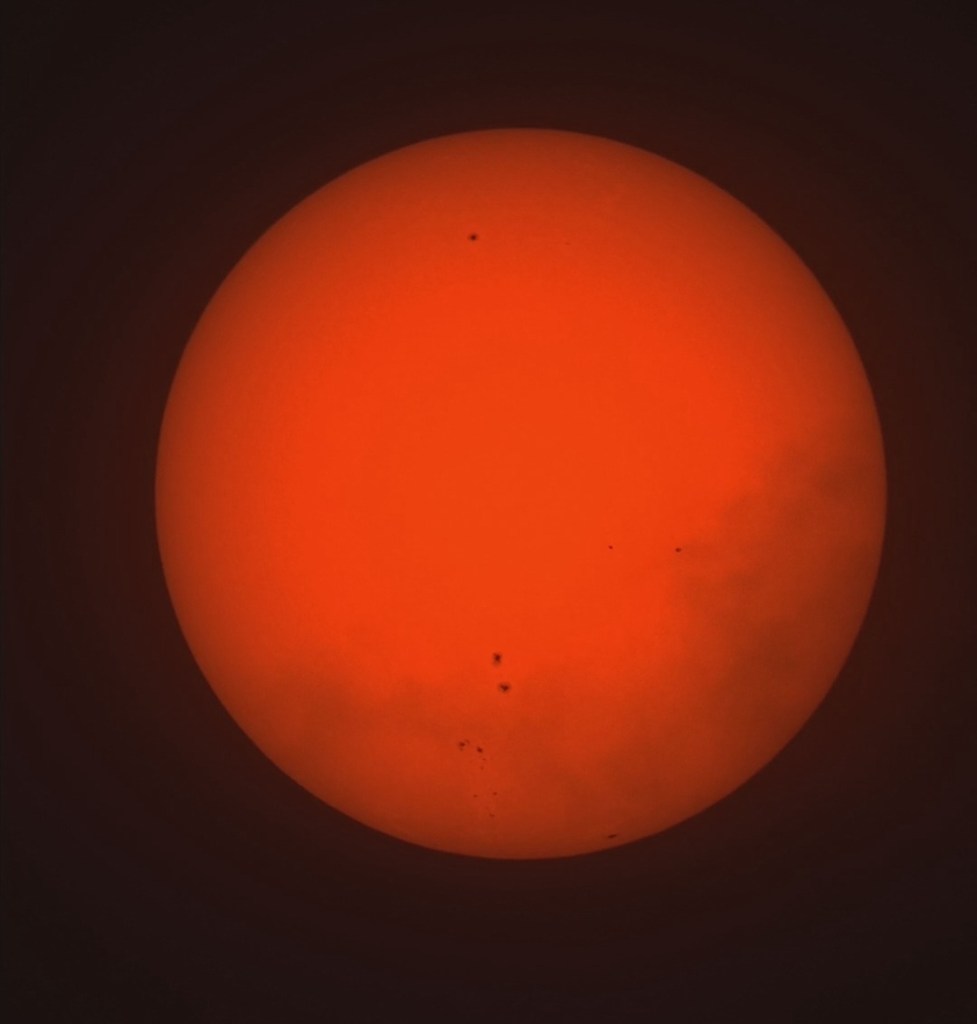
It’s a bit of a learning curve (where did that phrase come from?) but I’ll get there. Being the middle of the afternoon, the obvious celestial object to look at right now was the Sun. After several failed attempts, due to incompetence, plus clouds getting in the way, here is the very first decent image.

The Sun, with spots

I have so many ideas of objects that I’d like to capture myself in the coming weeks and months. I have admired (and been envious of) many of the pictures taken by others over the years.

The following night, I stayed up late to see the night sky. The Moon was the obvious next target: it’s big, and just a few days from being full.

The Moon

Because of street lights, and other issues, I couldn’t focus on any stars or planets, but that will come with time. Watch this space. Again, thank you very much, Jenny and Helen.

One of the best ways to see a city is on a bus tour. Here in Albuquerque, Liesel, Leslie and I chose to go on a Trolley Tour of the city. Our guide (sorry, I can’t recall her name) was very informative and, given all the various jobs she’s had over the years, in several states, she must be about 120 years old. Half Indian and half Spanish/Mexican.

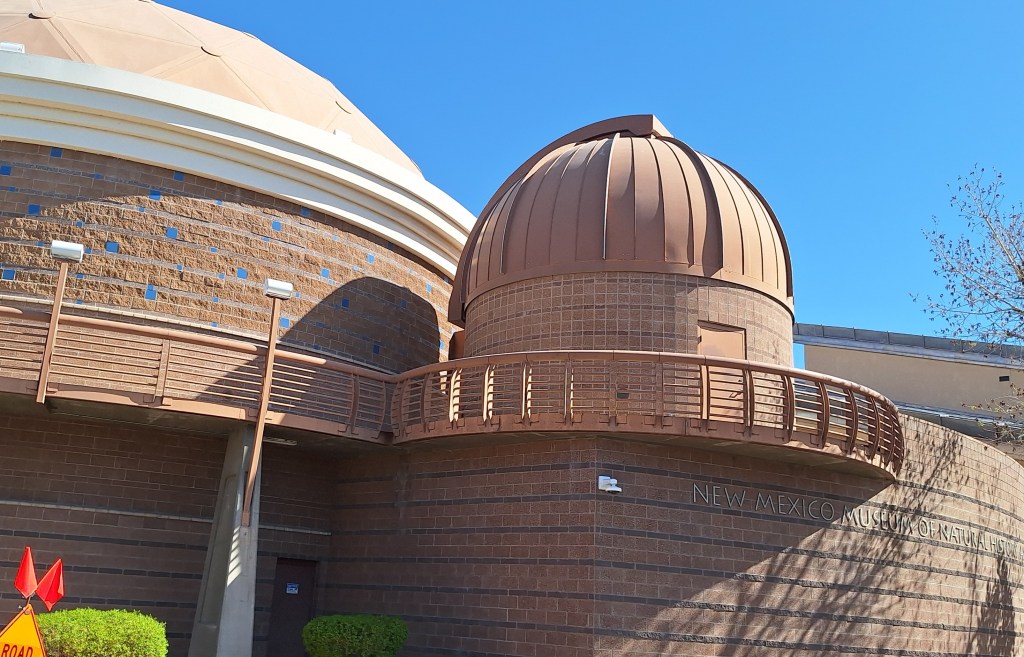
Planetarium and Astronomy Center
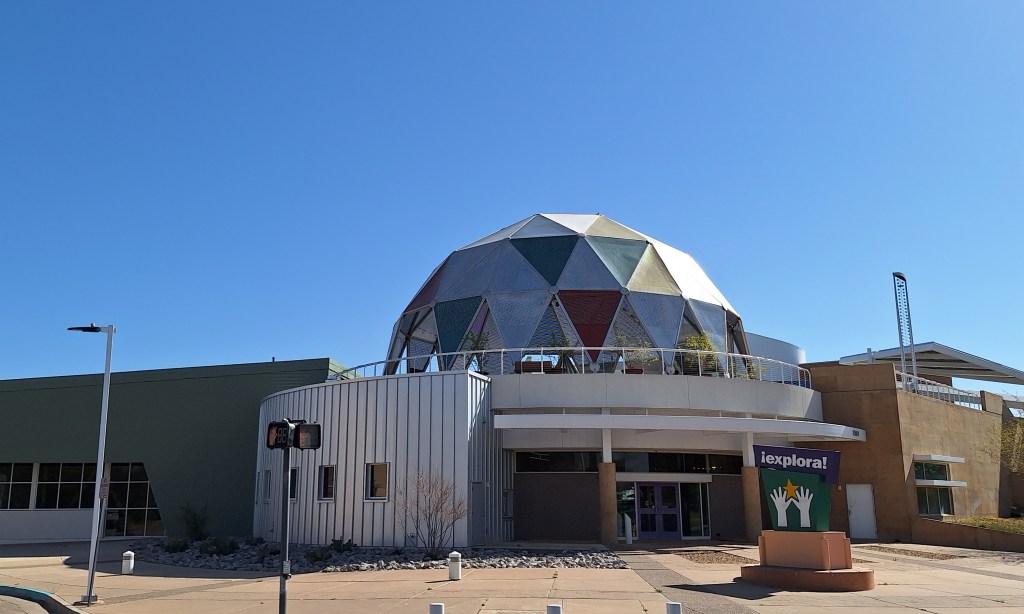
Explora Science Center and Children’s Museum

I wondered whether all the landmarks would feature domes, but no, I think these were the only two. We passed by several buildings and sites that feature in the TV series Breaking Bad, but of course, not having watched it, despite several recommendations from lots of people, they didn’t mean much to us. Our guide was once a carpenter, and she was responsible for laying a floor in a room for a scene in Breaking  Bad. One of the characters said it was a lovely wooden floor. Now, that is a claim to fame.

We drove along a section of the old Route 66, 18 miles of which is within the city boundaries.

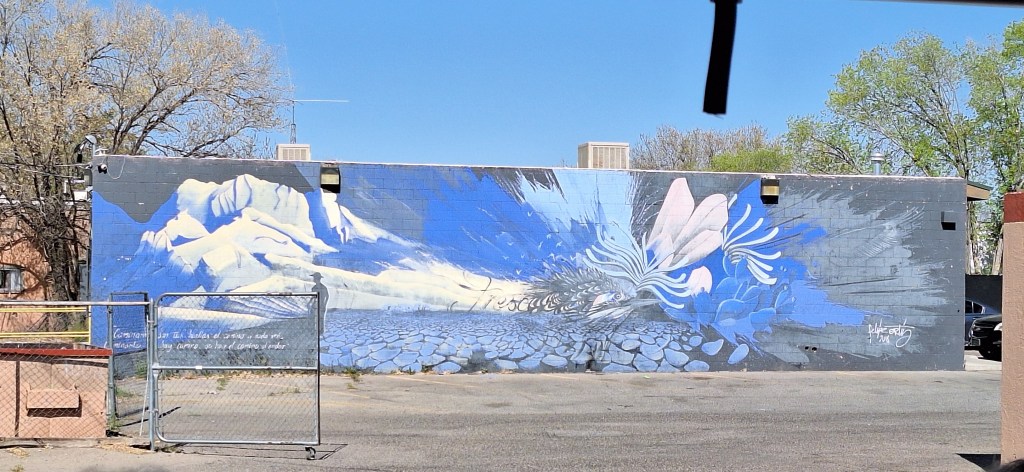
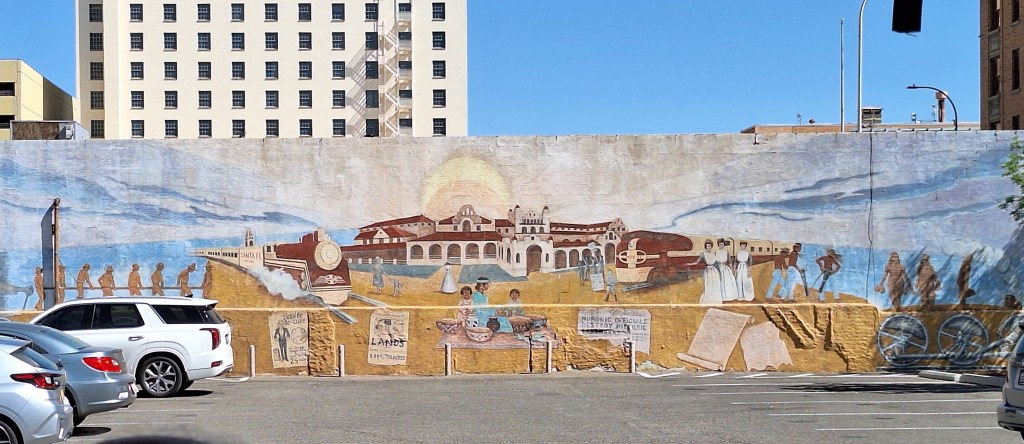
The city supports local artists and is very proud of the murals that appear everywhere, on pretty much every otherwise blank wall.

Mural

What we find amazing is that none of the artwork has been spoilt by graffiti or tagging. So civilised.

Another mural

The local Minor League Baseball Team is known as Albuquerque Isotopes, so named following a sequence in an old Simpsons episode, and a popular name due to the large number of scientific facilities in the state dealing with nuclear research. Remember that for your next pub quiz.

In the afternoon, Liesel and I visited the New Mexico Museum of Natural History and Science. Not at all because we wanted to escape the heat of the day! Actually, it’s a great place, lots of focus on dinosaurs and climate change.

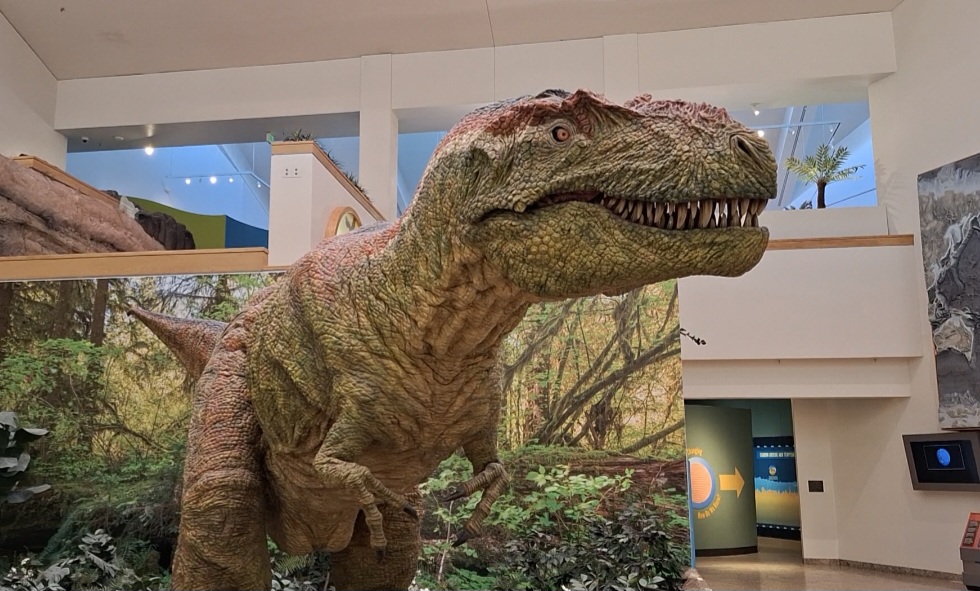
Bisti beast

Greeting us in the museum was the Bisti Beast, an animated model of Bistahieversor   (meaning “Bistahi destroyer”), an early
ancestor of Tyrannosaurus rex.

Selfie of the day

Yes, of course I had to take a selfie using the camera on the life-size replica of the Mars Exploration Rover Opportunity. Does that make us Martians?

In the planetarium, we watched Life: A Cosmic Story, telling us how life bgan on Earth. Being narrated by Jodie Foster wasn’t enough to prevent Liesel from nodding off a bit. Well, it was warm and dark and the seats were so comfortable…

Another video we watched was about the asteroid that ultimately made the dinosaurs extinct.

The Chicxulub Impact

The Chicxulub (CHIK-shoo-loob) crater is believed by scientists to have been created by the asteroid impact that ended the Cretaceous Period. The crater was named after a nearby village. “Chicxulub” is a Mayan word that means “sign of the horns.” Half of the crater is buried beneath the limestone plains of the Yucatan and half beneath the water and sediment of the Gulf of Mexico. Instruments have shown that the whole crater is about 112 miles in diameter. The object that created this crater was probably about six miles in diameter and traveling at a speed of 9 to 12 miles per second when it struck the Earth. On impact, it released energy equivalent to the explosion of more than five billion tons of TNT.

The plaque onsite has a typo, which I have corrected here in this reproduction. But what amazed me was, what great quality the film was from 65 million years ago,

Outside it was now 88°F according to the car’s display, 31°C.

Settling in

After arriving in the cold, I thought maybe that was just a hiccup, and that normal service would be resumed the following day. No, sirree. It was still cold, so, reluctantly, I wore a coat for our visit to The 15th Annual Southwest Chocolate and Coffee Fest. The event was very popular, hundreds of stalls, and hundreds of visitors. I’d like to say we tried hundreds of samples, but no, just a few. The pecan and green chilli cookie sounded intriguing. But my small sample was enough to set my tongue on fire and for steam to erupt from my ears.

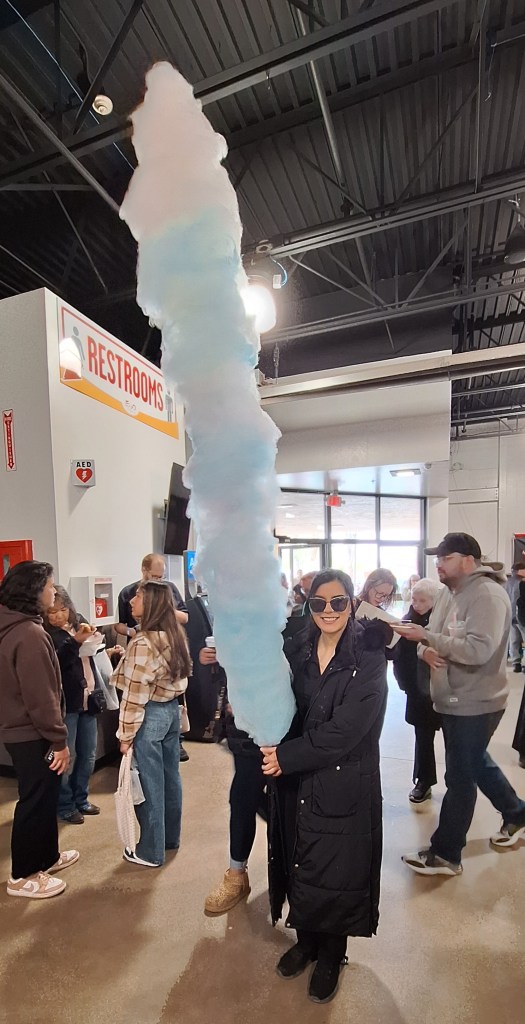
It wasn’t all chocolate and coffee, lovely though that was. We tried cheese curds, various jams and bread, but not the candy floss. This girl did, though.

Candyfloss

On this day, we saw a roadrunner ahea⁰d of us on the road, but the following day, I was quick enough to capture one, photographically speaking. It ran across the road in front of us rather than along the road like the cartoon character, but still, this was our first New Mexican wildlife.

Roadrunner

Well, I say ‘wildlife’, but some of the locals do feed these birds. We visited Albuquerque’s Old Town and learned some history of the place. Here, it was the Spanish conquistadors who arrived and changed the way of life of the indigenous peoples. We visited the Romero Street Gallery and enjoyed a wide variety of different art.

To name just three artists, we liked David Schneider’s photographs. He must hang around for hours just to get the perfect lighting, the optimum number of clouds and nothing to distract from the shot. He does no digital editing afterwards, making the large, printed pictures all the more remarkable.

Paul Uhl’s pottery at first sight looks a bit wonkey, but the decoration is superb. One piece in particular appealed to Liesel and me, featuring aspens, which look very similar to silver birches.

Digital art is the forté of Barry Reithmeier. His pictures look very futuristic, recalling the covers of some old 1970s science fiction books.

Why no pictures here? Because we weren’t allowed to take photos in the gallery. You’ll just have to visit yourself, come on in.
Next door, we had one of the best cups of coffee ever. Santa Cecilia is the name of the place, and you can imagine our disappointment a couple of days later when we turned up only to find it was closed.
Santa Cecilia

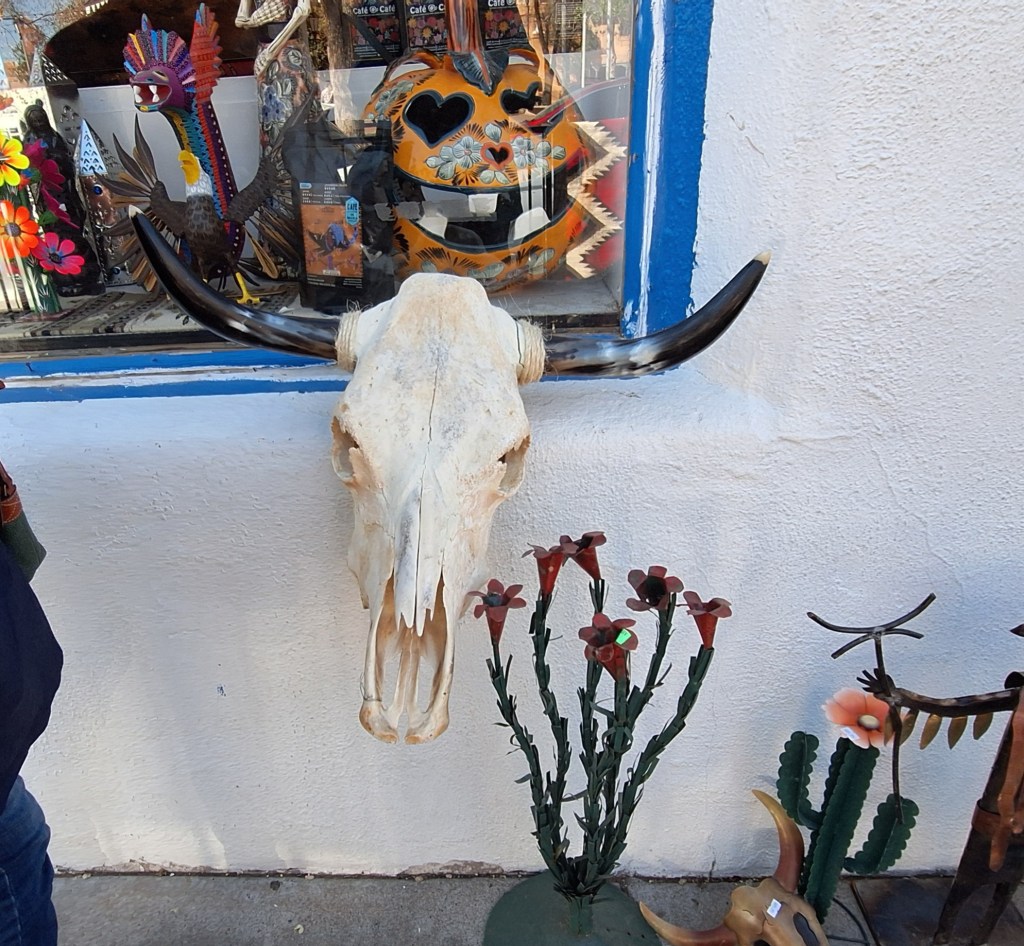
We walked around the Old Town some more, and it wasn’t long before we came across another animal. Dead, admittedly. And only a small part of the beast. Some shops are decorated with skulls.

Cow skull

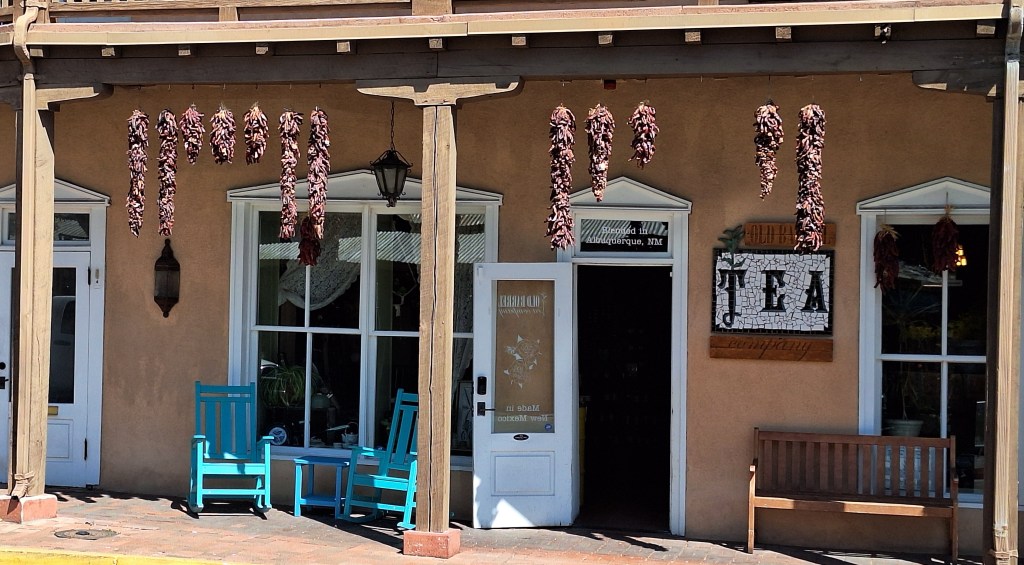
Another common sight was chili peoppers hanging up outside many of the shops. There are a lot of chilis in Albuquerque, whether hanging outside to dry, or being sold in shops, or appearing in most meals.

Chili peppers

It was Sunday and there was probably a service taking place, so we didn’t explore the church.

San Felipe de Neri

This church was built in 1706 and is one of the city’s oldest buildings.

We dined at Monroe’s, Albuquerque’s top(?) Mexican restaurant. The booking was for six, but in the end, Neil didn’t come. It transpires bookings are often made for more people in the party than will actually turn up, because then, everyone gets more space.

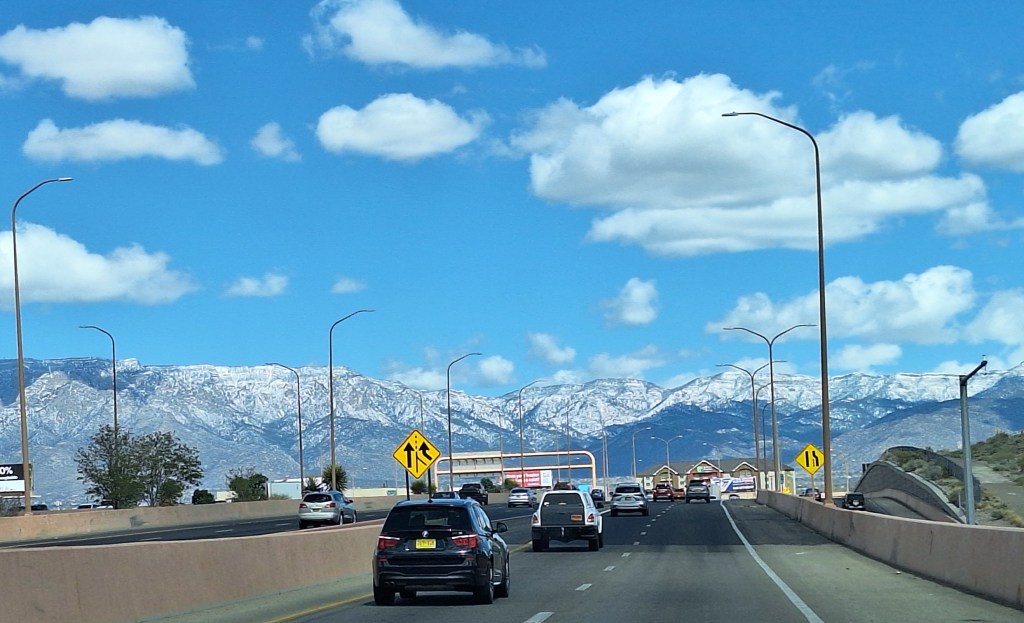
On the drive home, I couldn’t help but notice how the clouds look fake. Like a painting of clouds. They look like how clouds used to look in my childhood, fluffy and white, not the solid battleship grey slabs we get in Manchester now.

Clouds

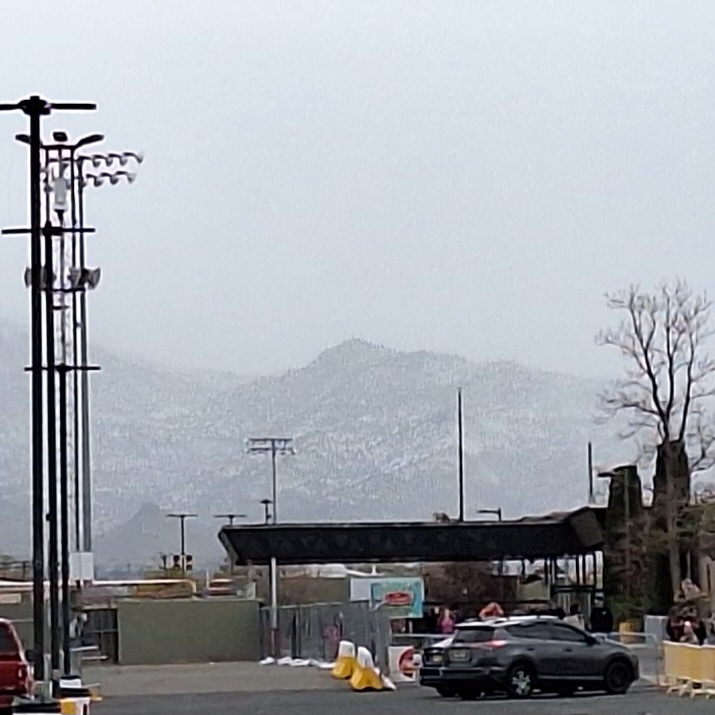
Note also the mountains over there, covered in snow. Yes, it has snowed quite recently in New Mexico, all around Albuquerque.

Gabe had recommended to me and Liesel that we visit the Rio Grande Nature Center. Yes, the actual Rio Grande flows through the city, and it wasn’t too far to drive to the Nature Center. It was warmer today and the weather forecast looks promising too, getting warmer every day this week. On the drive, we encountered one of the city’s few roundabouts.

Silence is violence

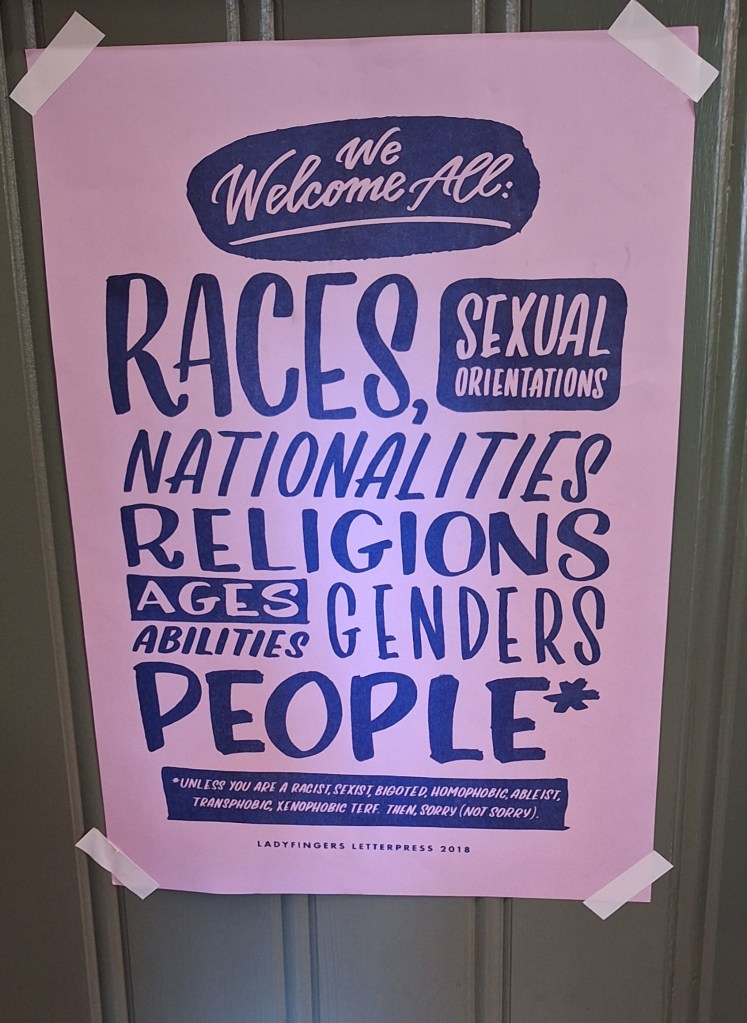
It’s heartlifting to see this sign, confirming again that not everyone in America is a magat. Just like the sign in the coffee shop yesterday. There are plenty of decent people around, despite what the news outlets would have us believe. In fact, Gabe attended one of the many ‘Hands Off’ protest rallies across the country.

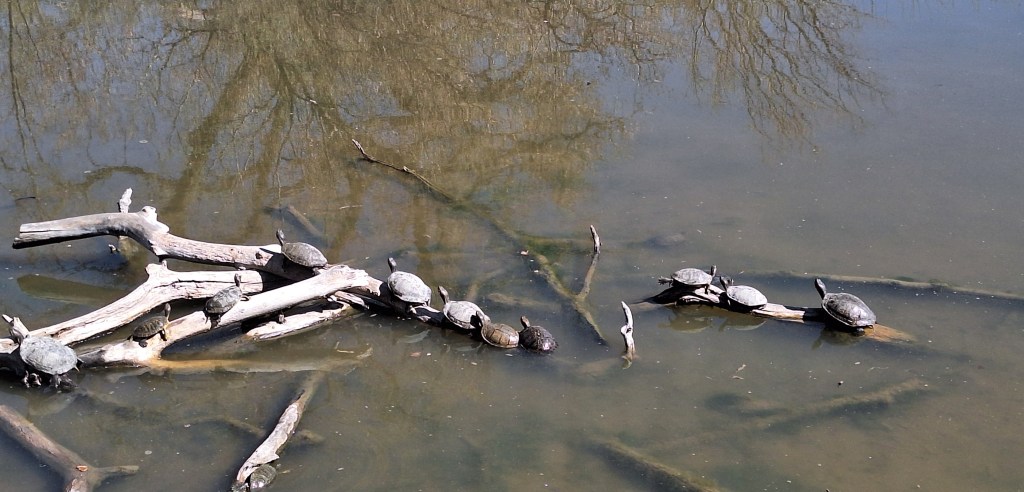
While expecting to see birds out on the water, we were surprised to see several turtles soaking up the heat of the Sun.

Turtles

Have you heard of a red-eared Slider turtle before? No, us neither, yet here they are in all their red-eared glory.

We did see some birds as we explored The Bosque, well, a small segment of the 300-mile long forest ecosystem along the valley of the middle Rio Grande in New Mexico that extends from Santa Fe, through Albuquerque and south to El Paso, Texas.

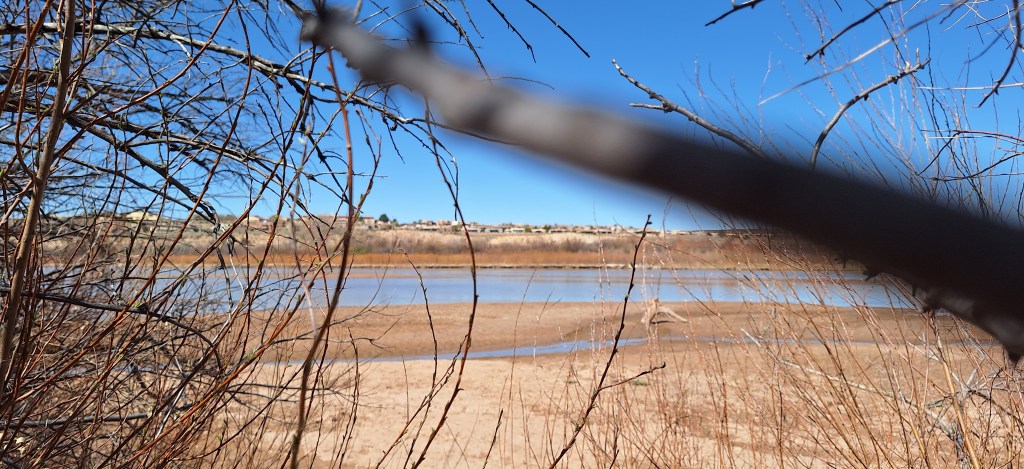
Running roughly parallel to the river is the riverside drain. Which today was dry. Even the great river itself was very low and for a long time, we couldn’t see any flowing water. But then, a glimpse through the bushes.

Rio Grande

Liesel and I had planned to do some proper touristy stuff today, and our next destination was the Coronado Historic Site and Kuaua Pueblo, north of Albuquerque. A pleasant drive, and for the first time, it was hot enough for mirages to appear on the long, straight, undulating roads.

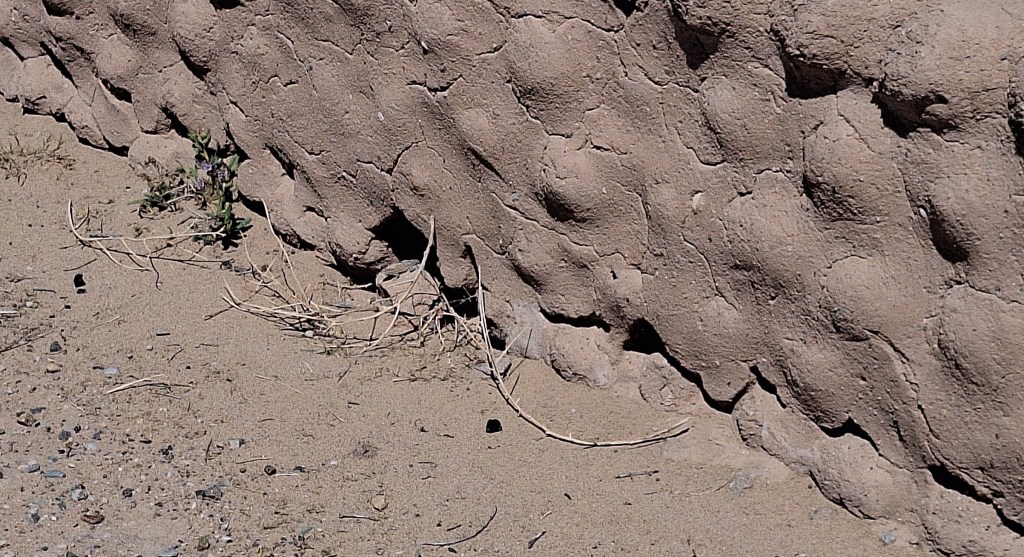
We enjoyed our stroll around the old Pueblo, admiring the adobe buildings, basically made from the local mud.

Reconstructed ruins
Spot the lizard

The history of this place was intriguing because, while Coronado was ‘exploring’ Mexico and searching for the seven golden cities, the Tudors were in control in England and yet our school history lessons never mentioned what was going on in the American continent at the same time.

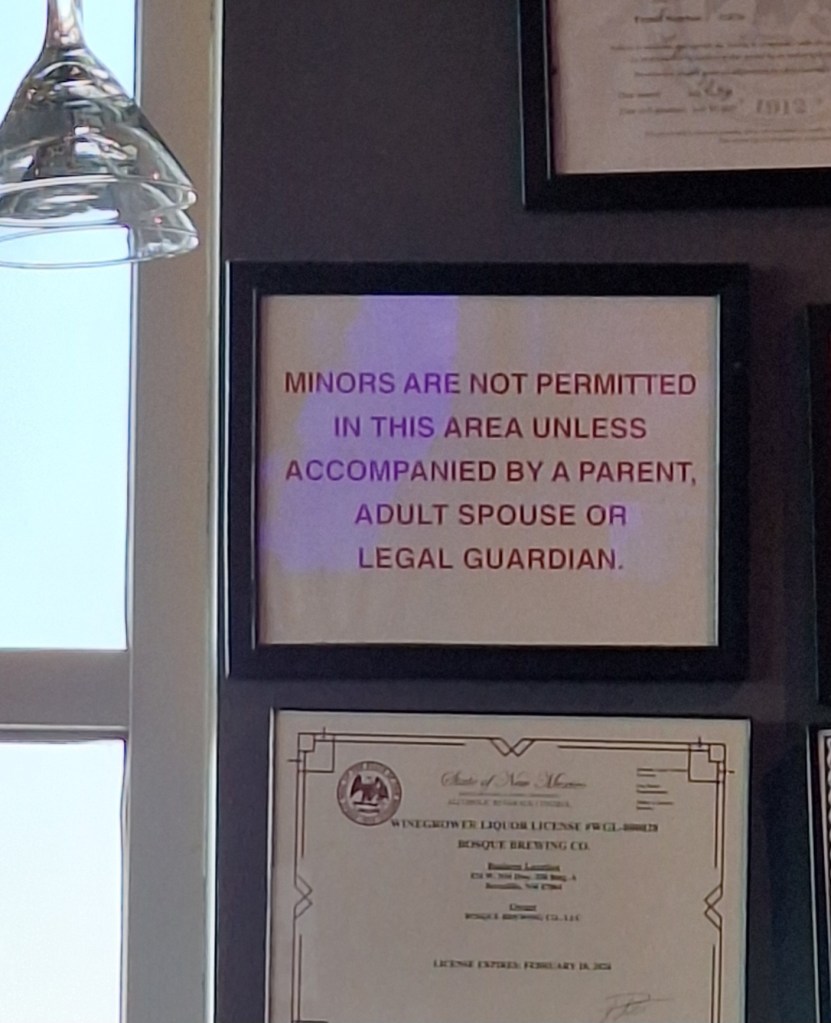
Lunch was taken at Bosque Brewing Company in Bernalillo. I was glad to find this place, because should the opportunity ever present itself, I will be welcome to bring my child bride here.

Notice

Our final attraction today was the Petroglyph National Monument. This would entail a long walk, longer than we came prepared for. We’d brought no water with us and it was beginning to warm up nicely. So we decided to return on another occasion.

We returned to Buzz’s place for another filling evening meal, thank you very much, followed by another night, for me at least, of weird and wonderful dreams that I can’t remember.

United in Atlanta

After a day of packing and ticking things off the to-do list, we collected Martha and William from school. It was a nice enough day to spend some time in Bruntwood Park. Of course, that meant their snack for the day was ice cream. Martha spent most of her time spinning in the small thimble in the sandpit, allegedly to prevent the smaller people from filling it with sand.

Martha

Meanwhile, William ran about all over the place, climbing both the climbing frame and a couple of trees. Then, being a slightly smaller child, he put some sand in the newly vacated thimble

William

After dropping the children off at their home, the three of us returned to ours. Some more packing before a very short night’s sleep.

At 3am, we arose, bleary-eyed, excited and trepidatious. I took Liesel and Leslie to the airport for their very early flight to Frankfurt. They had a great time in Michelstadt and Heidelberg with our friends Fe and Gabi, whom we’d seen last year. I can’t describe in detail what they all got up to, but here are some photos, thanks, Liesel. Naturally, I went back to bed for a few more hours.

Schloss Fürstenhau, Michelstadt
Half-timbered house in Michelstadt old town
Heidelberg Castle
Sundial at Heidelberg Castle
Fe, Gabi, Liesel and Leslie

I think it’s fair to say they had a better time for a couple of days than I did! I was busy at home, packing, eating, washing up, taking out the rubbish, booking a taxi, putting an address label on my suitcase, but most interestingly, replacing the battery in my Kindle. A straightforward job that I’ve done before, but this time, I managed to damage the screen in the process, grrr. I copied all the photos from my phone to the PC. I drove over to see Jenny, briefly, to drop the keys off and offload some vegetables that will just rot over the next few weeks. You’ve probably guessed, I’m going away too, and I had a lot of last-minute jobs. I missed out on the regular walks this week, but I did go for a quick stroll via the barbershop.

My flight wasn’t quite as early as Liesel’s, and I was more worried than usual about flying into the USA, given the stories we’ve heard about visitors and students and others being detained or even deported by ICE. Other than the tag-printing machine not working, I sailed through the processes at Manchester Airport, no problem.

My flight to Atlanta was great, in the sense that I managed to watch two whole films, Le Comte de Monte Cristo, in French, but with English subtitles, and Close Encounters of the Third Kind (Director’s Cut), which was probably the version I saw many years ago, then known as Close Encounters of the Third Kind (Special Edition)!

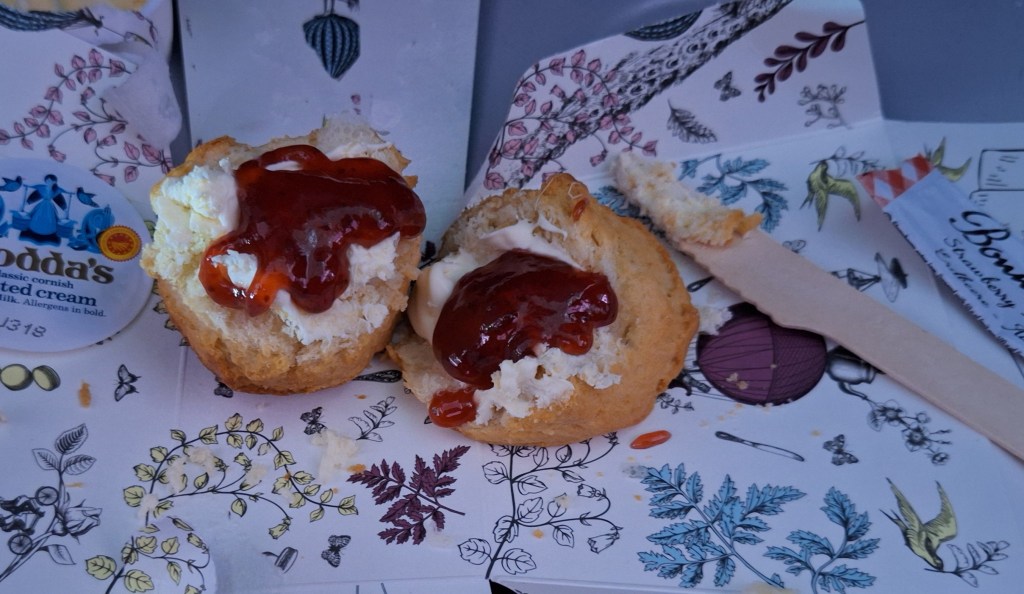
In-flight afternoon tea, thank you Virgin Atlantic

The moment of truth. Deep breaths. Try not to look guilty. But the Customs and Immigration Officer I met today in Atlanta was the most friendly, welcoming, smiley one of the many who have ‘greeted’ me over the years.

I caught the Plane Train to another Terminal, rode the escalator up and met Liesel. She and her Mom had arrived from Frankfurt just a couple of hours earlier. 

I had a plate of nachos before we walked to our gate for the next flight, to Albuquerque. We’re staying with Liesel’s aunt (Leslie’s sister) Buzz, not forgetting Neil and Gabe.

They all met us at Albuquerque Airport… oops, I mean, Albuquerque International Sunport, and drove us back to their house. It had been 27° in Atlanta, but here, it was a miserable 7°. What a contrast.

We’d all been up for over 20 hours, so it wasn’t a hard decision to make: yep, let’s go to bed straightaway.